
A Shared Reality
Part 4 of a 6 Part Series on Defining Open with Thoughtfulness in the Age of AI

This is the fourth post in a series based directly on my keynote at the EBSCO User Group Meeting in Omaha, Nebraska, where I’m exploring what it means to reclaim information sovereignty by defining “open” through the lens of AI. Just as I did for my WOLFcon Plenary and iPres Keynote, I want to bring the substance of that talk into written form so that the conversation can continue -- and also, I had to cut a TON of content from the talk that I think is very relevant to the conversation as a whole. You can explore the rest of the series here:
Part 2: The Forcing Function
Part 3: The Ideological Storm
Part 4: A Shared Reality
Part 5: Governance and the Commons
Part 6: Reclaiming our Seat at the Table
Over the last year or so, as I’ve been writing this Substack, I’ve learned that so much about information and technology is wrapped up in the politics of society. One of my biggest takeaways has been that when we lose agency over information and technology, we lose the ability to live together in a shared reality.
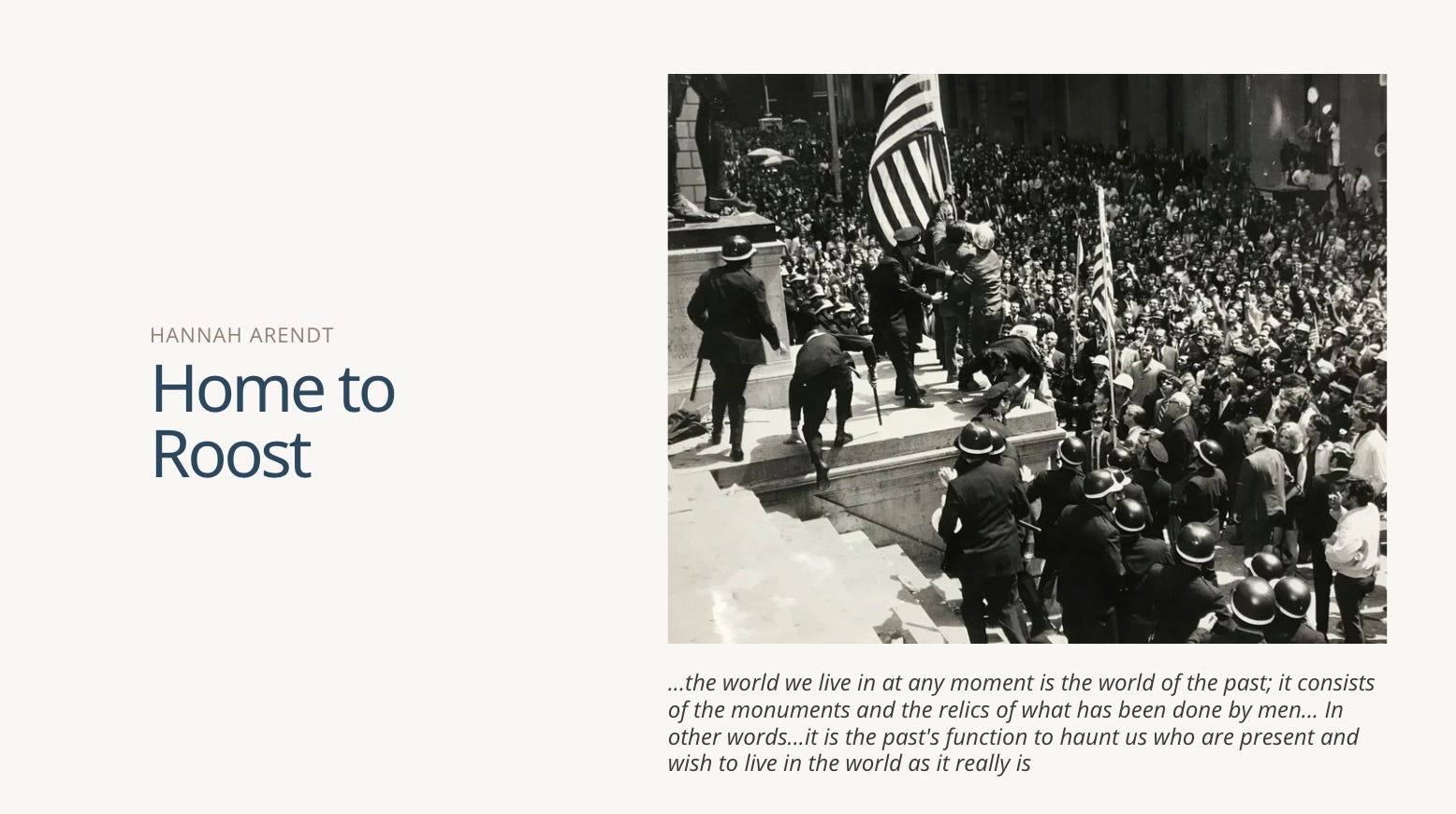
In 1975, Hannah Arendt gave a Bicentennial Address titled "Home to Roost." She warned that a deeper corruption of political reality occurs when greater emphasis is placed on “image-making.” This is something I discussed in my iPres keynote, and I’ll link to that post below. Essentially, Arendt believed the pursuit of image-making can hollow out the government’s moral judgment and turn institutional machinery into the infrastructure of denial. She argued that a shared reality is the only thing that sustains political life. By replacing truth with image, citizens become alienated from one another and from the shared reality they depend on. So, to put it in today’s terms, when we retreat into our algorithmic boxes, we aren’t just being distracted; we are allowing the foundation of society to rot away.
The Myth of Neutrality

Welcome to the second installment of my iPRES keynote series. In Part 1, teed up the presentation and an introduction to the grounding of the series. Now, in Part 2, we turn to the foundational myth that underpins many of our current challenges: the myth of infrastructure neutrality.
I have one of those boxes. My box is on Instagram. At present, it’s filled with fashion, dogs, cats, crochet and other crafts, and home renovations. My box is a space designed for zoning out, not learning. However, unlike the vast majority of social media users, I recognize that I am in a box. In grad school, I learned how fine-tuning algorithms can change search results; basically, I studied the mechanics of social media. Many users don’t realize that endless scrolling isn’t a choice that you make; algorithms are replacing users’ ability to search for and choose content with automated curation. Algorithms are taking away humans’ agency over the information they consume and the technology they engage with.
I’ve learned the mechanics of these tools, not to endorse them, but to reveal exactly how agency is being taken away from us. I know from reading Arendt that trust in a democracy is a calculated decision based on shared reality. When a citizen can no longer verify the shared reality, they cannot trust the knowledge they receive from anyone.
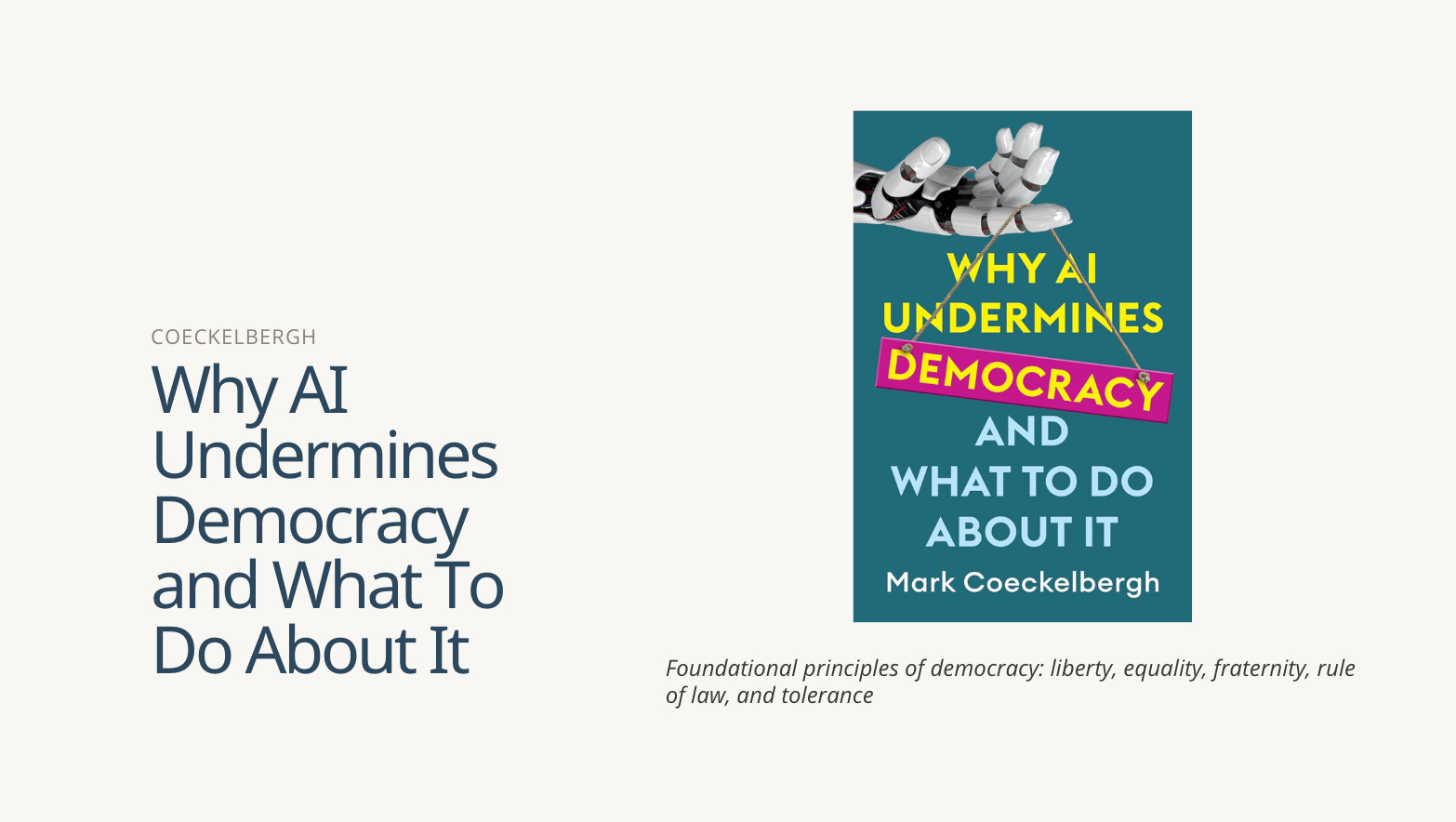
Lately, I’ve been spending a lot of time with Mark Coeckelbergh’s book, Why AI Undermines Democracy and What to Do About It. Reading large sections of his work feels so aligned with my own thoughts that I wonder if I might have written them myself. Coeckelbergh explores how contemporary AI—particularly social media and Large Language Models—confines us within the algorithmic boxes I previously mentioned. He highlights the immense power and control accumulated by AI corporations and their persistent efforts to maintain that dominance over the technologies we use.
In Chapter 6, my alignment with Coeckelbergh comes to an abrupt end. In this chapter, he discusses how we can pull AI back from corporate hegemony. He identifies a lineup of roles he believes are essential to save the public sphere: independent journalists, non-corporate editors, and skilled mediators. He even calls on computer scientists to stop viewing their work as neutral and start seeing the political weight of every line of code they write.
But I think Coeckelbergh’s focus on job titles is a little short-sighted (I mostly just kept saying, "what about librarians!"); rather than identifying particular roles to be filled, I wanted him to identify skills and abilities that society can curate in the citizenry. The goal of this approach would be to empower society with more control over its information consumption. By integrating these capabilities into our educational frameworks, we can foster a deeper collective understanding of how these technologies and the information flowing through them function.
In an effort to build upon his work, I have identified the specific skills and competencies that I believe Coeckelbergh envisions as essential components of our social fabric.
I believe Coeckelbergh is looking for a citizenry equipped to handle what he calls our modern political-epistemic challenges—specifically, by restoring our capacity for critical evaluation and information veracity through rigorous fact-checking. He is calling for an ethical and political commitment to the common good, rooted in a republican conception of democracy (that’s small-r republican for those of you from the US), alongside a fierce insistence on independence and non-corporate alignment. He identifies a vital need for independent editors and mediators who can practice a form of mediatory neutrality, acting as democratic gatekeepers to guard against anti-democratic populism and authoritarianism. And finally, he demands that our technologies be anchored in core principles like transparency, accountability, and diversity—ensuring that the digital ecosystem ultimately answers to human values.
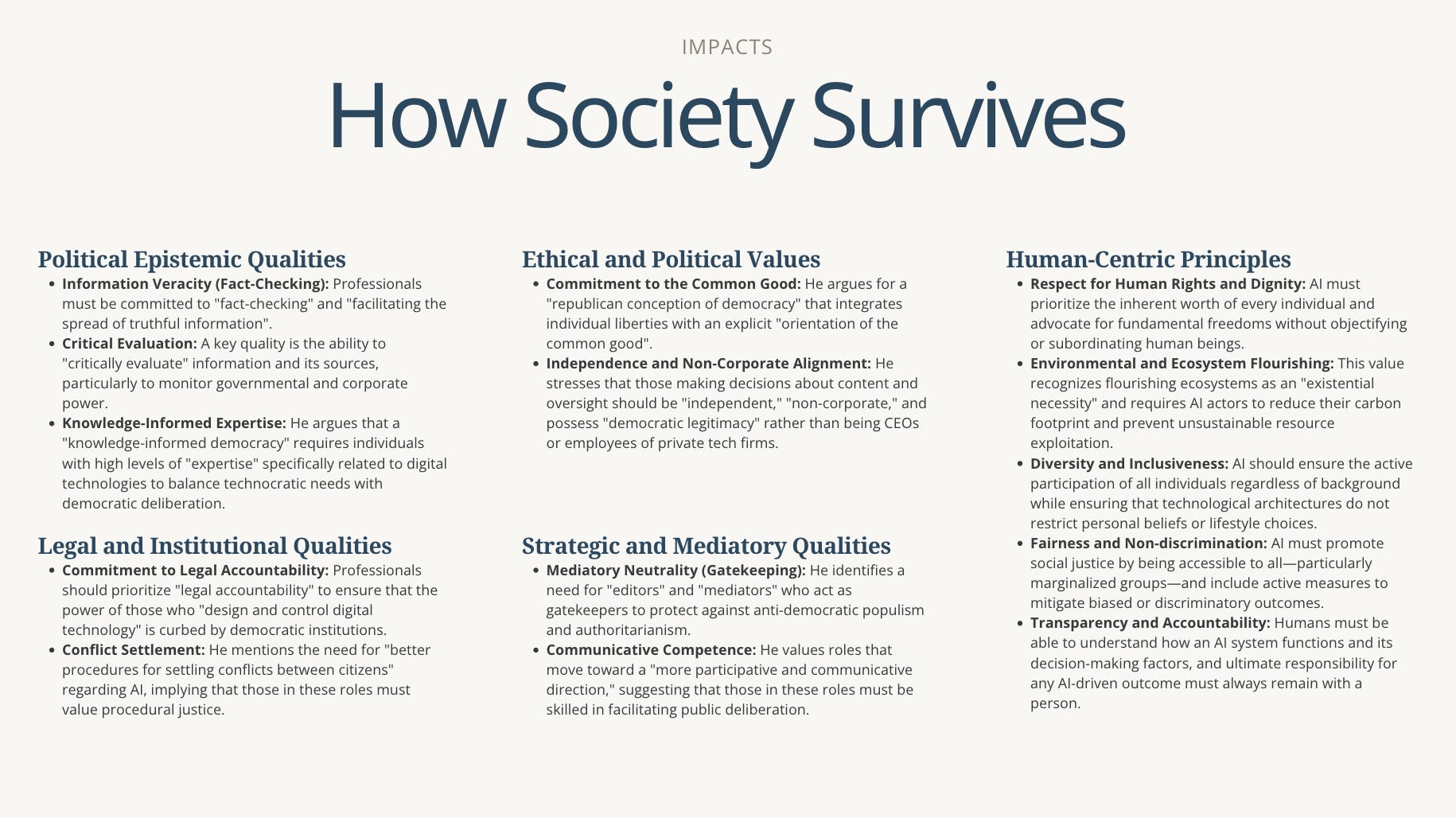
But as I was reading this chapter, I realized something. Guess what that list is? That is a list of skills and abilities you need to fulfill a library’s mission. Those qualities allow libraries to prioritize provenance, truth, and the preservation of the human record. This list of qualities he is asking the world to embed in AI companies is one that librarians have spent centuries refining. And the same is true for computer science, data science, and information technology (which I believe are newer forms of librarianship). Now we just need to figure out how to scale these skills and abilities to the entire citizenry (easy peasy, right?).
Did something I said spark an idea?
But this tension between a citizenry that needs open information to maintain agency and centralized structures that try to control it is not a new crisis manufactured by modern algorithms. It is the foundational struggle of democracy itself.
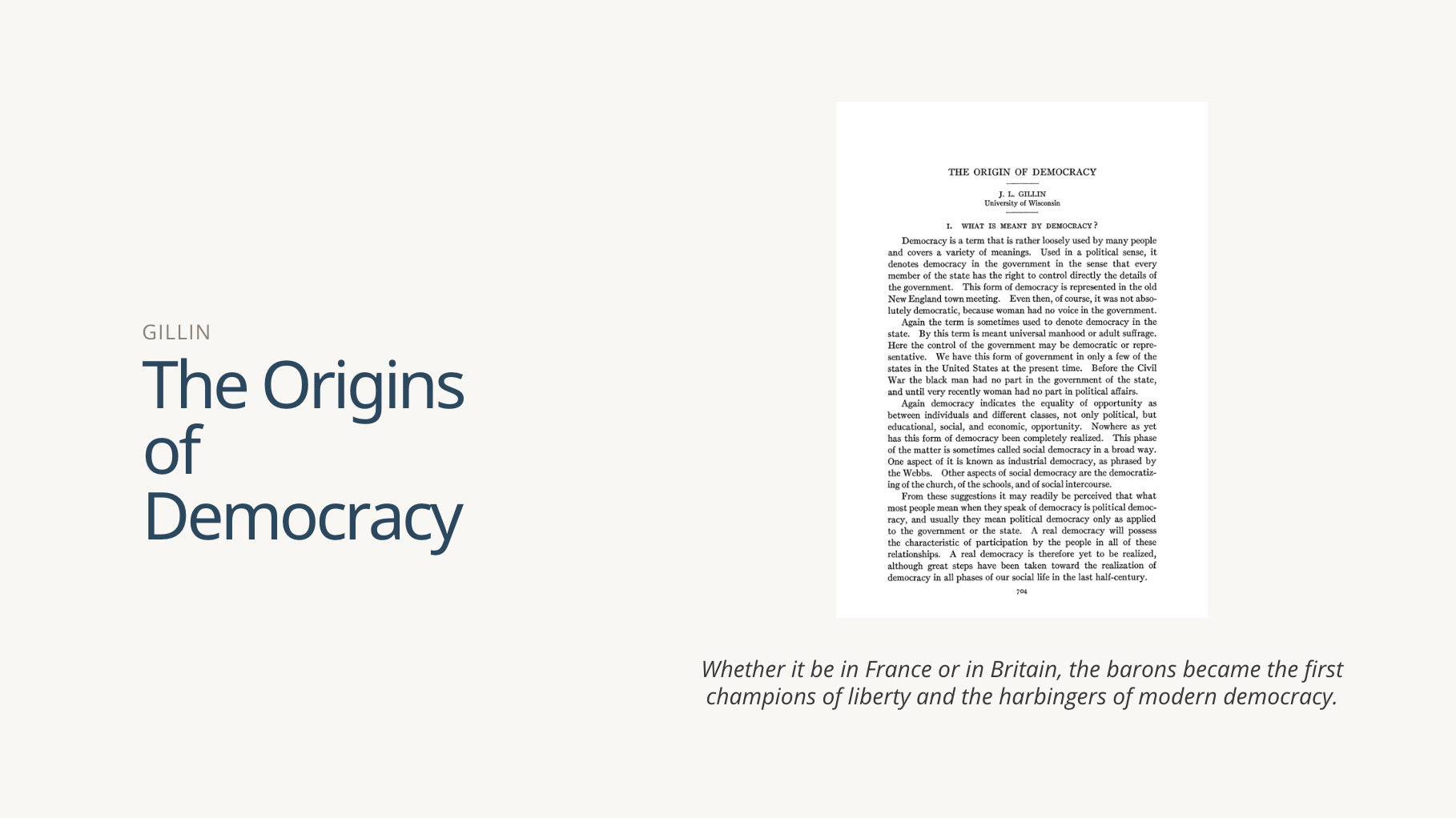
If we look at how information asymmetry has shaped human governance, we see that the free exchange of information has always been a necessary part of the formula for democracy. In his article, The Origin of Democracy, J.L. Gillin explores how the exchange of information and public debate served as the primary engine of primitive tribal democracies, where leadership relied on horizontal persuasion rather than coercive command. But as society grew, knowledge was increasingly hoarded by elites. The democratization of information through universal education became the great equalizer, breaking down silos so a diverse population could move beyond these silos to forge a shared reality.
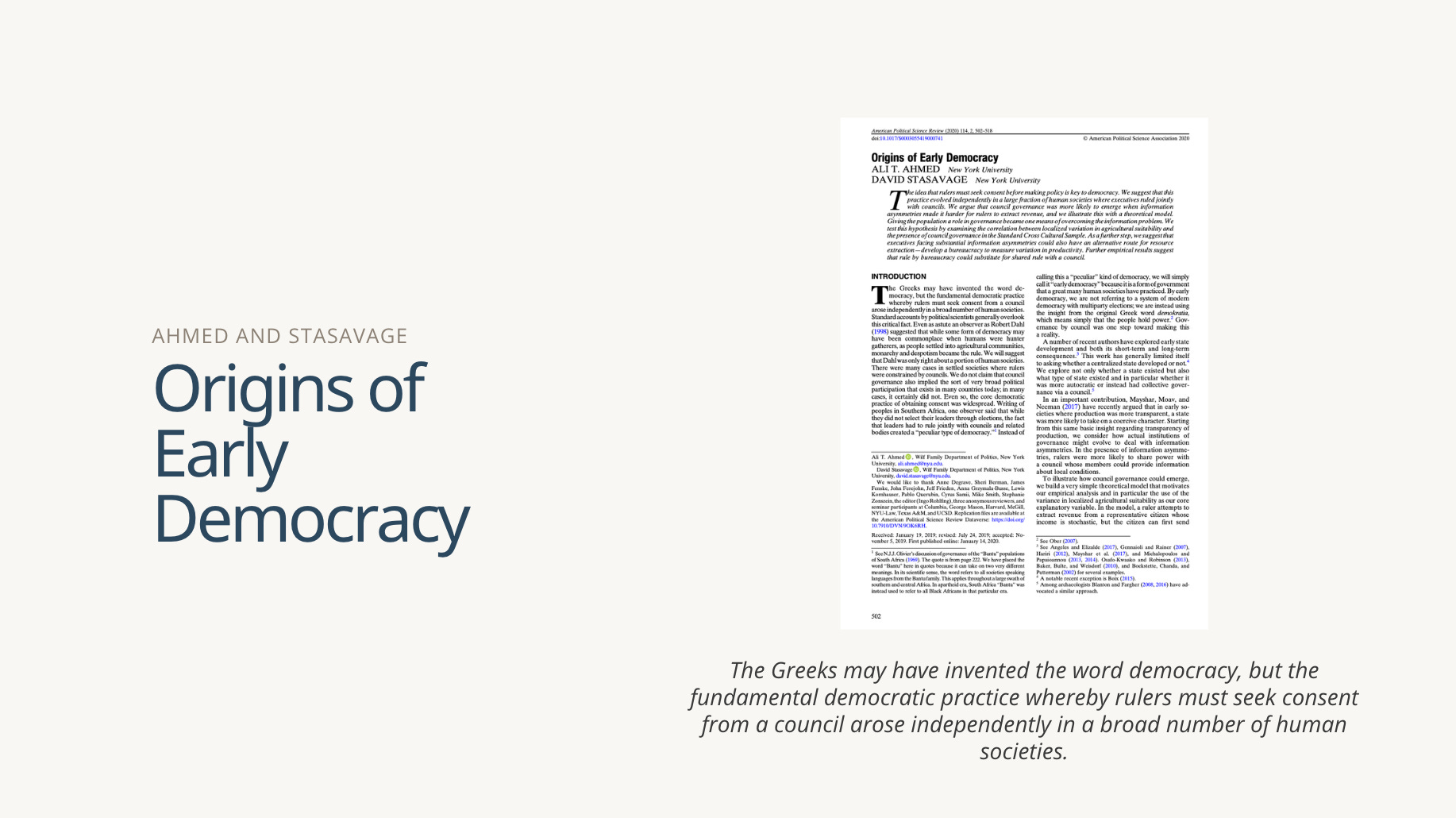
Conversely, when information is choked off, democracy fails. Ahmed and Stasavage argue in Origins of Early Democracy that early democratic practices were actually born as a practical solution to information asymmetry—rulers shared power with local collective councils because they needed accurate local crop data to tax fairly without sparking rebellion. It was a mutually beneficial exchange. However, these early democracies began to fail the moment states built centralized bureaucracies and writing systems to measure productivity on their own, effectively stripping subjects of agency over their own information.
This historical pattern brings us right back to Coeckelbergh. In Chapter 8 of his book, he focuses on this exact threat in our modern digital ecosystem. He argues that communication should be understood not just as the transfer of data, but as the active creation of a common world and the common good. He warns that modern AI and algorithms threaten this by isolating citizens into silos, destroying the shared reality necessary for political trust. To Coeckelbergh, the ultimate role of information is to transcend individual perspectives, which requires an information commons completely free from corporate hegemony.
When we look at these pieces together, we can map them onto the classic debates of political philosophy regarding why humans form societies in the first place:
J.L. Gillin represents the optimistic idealist (like Rousseau), believing that equal access to information naturally dissolves inequality and fosters a harmonious public mind.
Ahmed and Stasavage adopt a cold realism (like Hobbes), framing information exchange not as a community-building ideal, but as a calculated survival mechanism born of mutual suspicion between self-interested actors.
Mark Coeckelbergh occupies the middle ground (as Locke does), pragmatically arguing that while communication can build a democratic common world, it requires a fiercely protected, structured environment to survive.
Whether you view information exchange as a romantic ideal, a pragmatic calculation, or a tool for a shared world, the conclusion is the same: democracy requires a protected space where information resources are shared and managed by the community, not corporate overlords.
And I think if we want to find the blueprints for how to actually build and sustain the digital commons Coeckelbergh talks about, we need to turn to the work of the first woman to receive the Nobel Prize in Economics, Elinor Ostrom. We’ll unpack her blueprint next week in our fifth installment of this series.